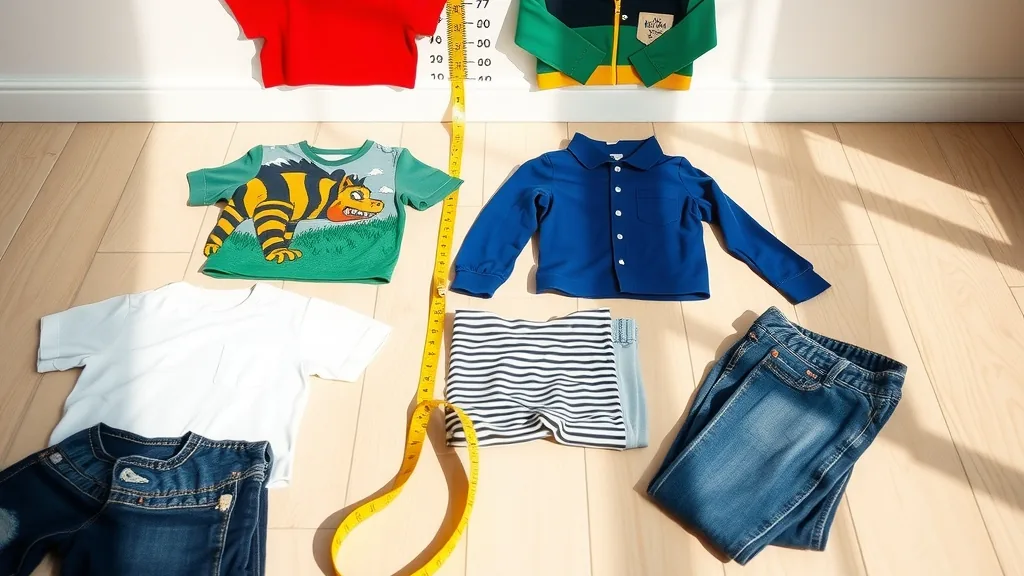
Children’s sizing is inconsistent by design: a 4T from one brand fits like a 5 from another, and age labels describe an average child who may not resemble yours. Shopping online works when you measure the child rather than the birthday. This guide covers the three measurements that matter, how to convert between sizing systems, and how to reduce returns without guessing.
Measure Three Things
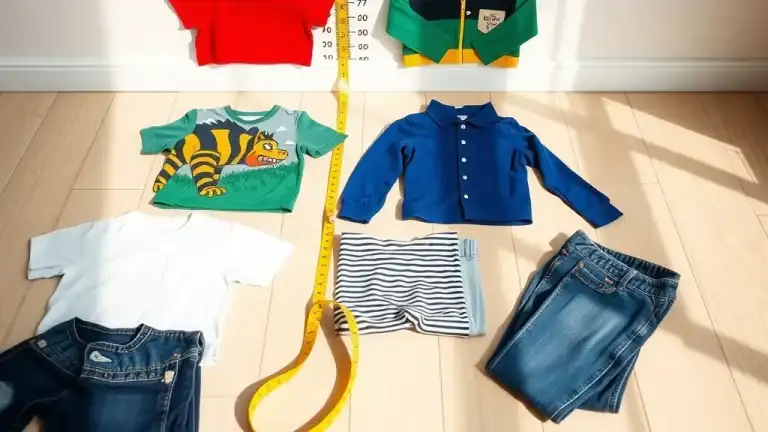
Height, chest, and waist cover almost every garment decision. Use a soft tape and measure over light clothing.
- Height: standing against a wall, heels together, no shoes.
- Chest: around the fullest part, tape level under the arms.
- Waist: at the natural waist, usually just above the navel for children.
For babies, add head circumference for hats and check weight for sleepwear, where sizing often follows weight rather than height. Write the numbers down with the date; recheck every three months, because growth is uneven and often jumps in a season.
Size Conversion at a Glance
| US size | Approx. age | Height (cm) | UK | EU |
|---|---|---|---|---|
| 2T | 2 years | 86 to 92 | 2 to 3 | 92 |
| 3T | 3 years | 92 to 98 | 3 to 4 | 98 |
| 4T / 4 | 4 years | 98 to 104 | 4 to 5 | 104 |
| 5 | 5 years | 104 to 110 | 5 to 6 | 110 |
| 6 | 6 years | 110 to 116 | 6 to 7 | 116 |
| 7 | 7 years | 116 to 122 | 7 to 8 | 122 |
| 8 | 8 years | 122 to 128 | 8 to 9 | 128 |
| 10 | 10 years | 134 to 140 | 10 to 11 | 140 |
Conversions are approximate. A brand’s own size chart always wins over a generic table, and the chart is usually linked from the product page under “size guide”.
Why Age Labels Mislead
Age labels describe an average, and averages hide variation. Two children the same age can differ by 15 cm in height. Brands also design for different body shapes: some run slim, others generous, and a few adjust sizing by market.
Practical rules:
- Buy to the larger measurement. If height says 5 and chest says 6, choose 6 for tops and check the sleeve length.
- Read reviews mentioning fit. “Runs small” in three reviews is more reliable than the size chart alone.
- Check the return window before ordering a brand you do not know.
- Note the fabric. Cotton shrinks, synthetics do not, and stretch fabrics forgive a size up.
Brand Patterns Worth Knowing
Rather than memorising every label, track your child’s fit in three or four brands you actually buy. A simple note — “Brand A: 5 fits, Brand B: needs 6” — saves more money than any conversion chart. Most returns come from repeating a mistake with a brand you have already used.
For school uniforms and shoes, buy in late summer after the growth spurt, and keep one size up for the second half of the year. Shoes should have a thumb’s width at the toe, no more.
Shopping Online Safely
Check the seller’s return policy, delivery window, and whether sale items are returnable. Photograph the item before returning it, and keep the packaging until you are sure. If a price looks far below market, verify the retailer before entering payment details.
For a broader checklist, our safe online shopping guide for kids’ stores covers payment methods, delivery tracking, and how to spot a fake storefront. The Macy’s kids clothes guide applies these sizing rules to a specific retailer’s labels and seasonal sales.
If you are buying for a growing child on a budget, the kids boutique guide explains how small retailers price and size their stock, which helps you judge whether a sale is genuine.
A Simple Wardrobe Strategy
Buy fewer, better-fitting pieces and size up deliberately at end-of-season sales for the following year. Keep a small capsule: five tops, three bottoms, one outer layer, one pair of shoes per season. It reduces decision fatigue, makes laundry manageable, and means a growth spurt does not require replacing an entire wardrobe at once.
Label the size inside new items with a laundry marker. When a child grows, you will know instantly what still fits rather than measuring everything again.
How do I know my child’s clothing size online?
Measure height, chest, and waist, then compare with the brand’s own size chart on the product page. Age labels are only a rough guide.
Do US, UK, and EU kids sizes match?
Approximately, but not exactly. A US 5 is close to UK 5 to 6 and EU 110. Always defer to the brand’s chart.
Should I size up for children’s clothes?
Size up when measurements fall between sizes, especially for tops and outerwear. Avoid sizing up in shoes beyond a thumb’s width at the toe.
How can I reduce online clothing returns?
Track fit per brand, read reviews that mention sizing, check the return window, and photograph items before returning them.
About the Author