The Children'S Place
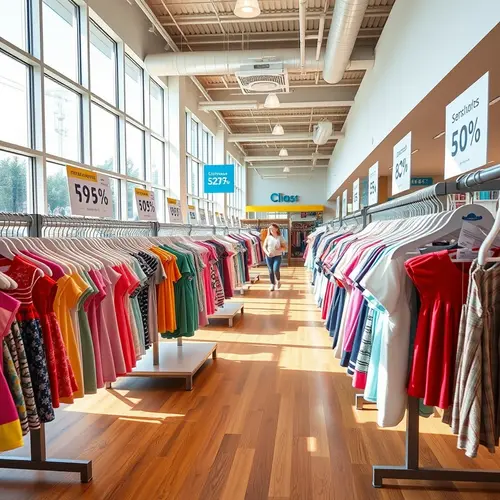
Seasonal Strategy and Inventory Management Merchandise cycles at The Children’s Place align with school calendars and weather transitions. Back-to-school represents the highest-traffic period, with heavy promotional emphasis and extended inventory. Holiday seasons bring formal wear and gift-appropriate items. Winter and summer transitions adjust outerwear and lightweight clothing emphasis accordingly. This seasonality is fundamental to children’s retail because school schedules and weather create distinct purchasing windows. The Children’s Place builds inventory planning around these predictable cycles, managing cash flow through high-volume periods. The Children’s Place rewards program provides points on purchases that accumulate toward discounts. Members receive early notification of sales and exclusive offers, creating engagement incentives beyond transactional pricing. The loyalty framework serves dual purposes: capturing customer data for targeted marketing and building repeat visit frequency. Parents who enroll typically increase visit frequency by 2-3x annually compared to non-members, a metric retail professionals use to assess program effectiveness. Contrary to predictions that specialty retail would collapse entirely, The Children’s Place persists because parents value curated selection over endless choice. Department stores and general retailers carry children’s clothing, but lack category focus. Online-only competitors miss the immediate gratification and fit assurance of in-person shopping. The Children’s Place occupies a defensible middle position: affordable enough to encourage regular purchases without requiring luxury positioning, yet selective enough to simplify shopping compared to department stores. This positioning, combined with physical convenience and reasonable quality, creates sustainable demand. Smart shopping at The Children’s Place involves timing purchases around promotional windows while maintaining adequate inventory for immediate needs. Enrollment in the loyalty program becomes worthwhile once annual spending reaches approximately $200-250, based on typical point accumulation rates. Sizing up slightly in basic items optimizes value because children’s clothing tolerates growth adjustment better than formal wear. Building a foundation of neutral basics during sales periods reduces the need for full-price purchases later. Understanding which categories hold value longest (jeans and outerwear) versus which depreciate fastest (trendy prints) guides allocation decisions. From a business analysis perspective, The Children’s Place demonstrates resilience through economic cycles because clothing represents a non-discretionary purchase category. Parents prioritize replacing worn-out items ahead of discretionary spending, creating stable demand even during economic uncertainty. The company’s financial health depends on inventory turnover velocity and margin management. Success metrics include comparable store sales trends, inventory efficiency ratios, and customer acquisition costs through loyalty programs. The Children’s Place invests continuously in supply chain optimization, technology infrastructure, and store experience improvements. These investments signal management commitment to adapting retail strategies as consumer behavior evolves. The Children’s Place provides genuine value for families seeking convenient, affordable children’s apparel with consistent quality. The retailer’s longevity stems from solving a real problem—helping parents outfit children efficiently without excessive price premiums or overwhelming choice architecture. Whether viewed as a practical shopping destination or a resilient retail business model, The Children’s Place remains relevant because it executes its core mission effectively and adapts systematically to changing retail dynamics.Loyalty and Membership Programs
Expert Perspective: Why The Children’s Place Endures
Making the Most of The Children’s Place as a Shopper
The Business Case for The Children’s Place Investors
Final Assessment of The Children’s Place


Related reading
How to tell whether it is working
Pick two or three signals you can check without guesswork, then look at them on a fixed schedule. For Children’s Place, useful signals are usually simple: whether the steps are being completed, whether questions get answered, and whether the result matches what was promised at the start.
Write the signals down before you begin, because memory is generous after the fact. A short review every two weeks keeps the decision honest and gives you an early warning while fixes are still inexpensive.
Where to get help without wasting money
Help with Children’s Place is worth paying for when it removes a specific blocker, not when it only adds reassurance. Before you buy anything, write down the exact question you need answered. If the offer does not address that question, it is probably not the help you need right now.
Free options come first: documentation, community answers, and one honest conversation with someone who has already done it. Most sticking points around Children’s Place are resolved at that stage, and the paid route becomes much clearer once the basics are settled.
Mistakes that cost time and money
The most common mistake with Children’s Place is treating the first option you find as the only option. Comparison is not busywork: differences in scope, support, and timing often matter more than the headline number.
The second mistake is ignoring the follow-up. Whatever you choose, plan how you will check that it worked. A quick review after two weeks catches problems while they are still cheap to fix, and it turns Children’s Place from a one-time decision into something you can improve.
What to check before you start
Before committing time or money to Children’s Place, it helps to know what a good outcome looks like. Write down the result you actually need, the budget you can live with, and the deadline you are working against. Those three answers rule out most of the options that look attractive but do not fit your situation.
Next, look at the details that are easy to miss: what is included, what costs extra, and what happens when something goes wrong. Ask directly about timelines and follow-up. A clear answer is usually a better sign than a low price, because Children’s Place is rarely a one-off purchase of attention.
A simple step-by-step approach
Start with the basics of Children’s Place and keep the first step small enough to finish in one sitting. Gather the information you need, compare two or three realistic options, and note the trade-offs in plain language rather than marketing terms.
Then test the decision on a small scale before you scale it up. This is the part most people skip, and it is the reason Children’s Place sometimes feels harder than it should. A short trial tells you more than another hour of reading, and it usually surfaces the one constraint that matters in your case.
Costs, timelines, and what is realistic
Budget talk around Children’s Place usually starts in the wrong place. Instead of asking what the cheapest option is, ask what the total cost looks like once fees, follow-up, and your own time are included. That number is the one you can actually plan around, and it usually changes which option looks sensible.
Timelines matter just as much. A quick result that needs rework costs more than a slower one that holds. Ask how long each stage takes, who is responsible for the handover, and what happens if a deadline slips. Anyone who cannot answer those questions plainly is telling you something useful about Children’s Place.